
Email Support
info@apesengineering.com
Call Support
+92 42 35307284, +92 339 4003849
Video Conferencing Solutions in Pakistan — Professional AV & Collaboration Systems by APES Engineering
Industries We Cover
- Data Centers
- Corporate Offices
- Government Projects
- Banks & Financial Institutions
- Healthcare & Education Facilities
Get in Touch
Looking for a reliable video conferencing solution in Lahore, Islamabad, or Karachi? Contact APES Engineering today to discuss your requirements and receive a customized conferencing system for your organization.
+92 42 35307284
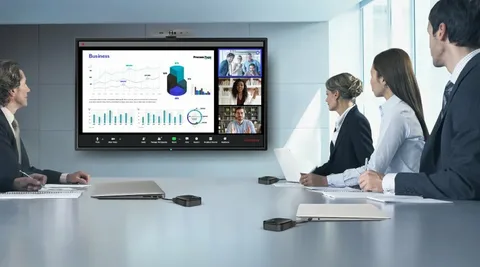
Picture this. Your CEO is in Lahore. Your head of operations is in Karachi. A key client is in Dubai. And your technical team is split between Islamabad and Faisalabad. Five years ago, bringing these people together for a meaningful, productive meeting required expensive flights, hotel bookings, and at least two days of everyone’s time — before a single decision was made.
Today, that same meeting happens in minutes. Everyone joins from their respective locations, sees each other face to face in high definition, shares documents and screens in real time, and walks away with decisions made, actions agreed, and relationships strengthened — all without anyone leaving their desk.
This is the transformative power of professional video conferencing solutions — and across Pakistan’s corporate, government, healthcare, and education sectors, organizations that have embraced this technology are communicating faster, deciding smarter, and competing more effectively than those still relying on phone calls, emails, and expensive in-person travel.
At Active Power Engineering Services Pvt. Ltd. (APES Engineering), we have been designing, supplying, and installing professional video conferencing and collaboration systems across Pakistan for over 15 years. From purpose-built executive boardrooms in Lahore’s corporate towers to multi-campus university collaboration hubs in Islamabad, from hospital telemedicine suites in Karachi to government command and control conference facilities — we deliver video conferencing solutions that work flawlessly, look stunning, and make every meeting count.
This comprehensive guide tells you everything you need to know about video conferencing solutions in Pakistan — the technology, the applications, the benefits, the key considerations, and why APES Engineering is the partner organizations across Pakistan trust with their most important collaboration infrastructure.
What Are Professional Video Conferencing Solutions?
A video conferencing solution is a technology system that enables real-time, face-to-face communication between individuals or groups located in different physical locations — over a network connection. At its simplest, it involves a camera, a microphone, a display, and a network connection. At its most sophisticated, it is an immersive, purpose-built collaboration environment with professional-grade audio, 4K video, interactive displays, intelligent camera systems, and seamless integration with the software and hardware your organization already uses.
The distinction between a consumer video call — the kind anyone can make on a smartphone — and a professional video conferencing solution is significant. Professional systems are engineered for:
- Consistent, reliable performance in mission-critical meeting environments
- Superior audio quality with echo cancellation, noise suppression, and microphone coverage for entire rooms
- High-definition video with intelligent framing, pan-tilt-zoom control, and presenter tracking
- Large-format displays that make remote participants feel genuinely present
- Interoperability across different platforms and systems
- Centralized management of multiple rooms and endpoints from a single administrative interface
- Integration with calendaring, room booking, VoIP, and collaboration platforms
In a professional context, video conferencing is not just about seeing and hearing each other — it is about creating a collaboration environment where distance genuinely stops being a barrier to effective communication and decision-making.
Why Video Conferencing Is No Longer Optional for Pakistani Organizations
Pakistan’s business and institutional environment has changed dramatically. Organizations that were once skeptical of remote collaboration have been compelled — by necessity — to discover its power. And having discovered it, they are not going back. Here is why professional video conferencing has become essential infrastructure for Pakistani organizations:
The Cost of Travel Has Become Unsustainable
Inter-city business travel in Pakistan — Lahore to Karachi, Islamabad to Faisalabad, Karachi to Peshawar — involves significant costs in airfare, hotels, ground transportation, and — most expensively — executive time. When senior leadership spends 20% of their working month traveling for meetings that could be conducted over a well-designed video conferencing system, the productivity loss alone justifies the investment in professional collaboration technology many times over.
Pakistan’s Geographic Spread Demands Better Connectivity
Pakistan is a large country. Organizations operating across its major cities — and into secondary cities like Multan, Gujranwala, Sialkot, Quetta, and Peshawar — face real challenges in keeping teams aligned, decisions synchronized, and culture cohesive across distances. Professional video conferencing bridges these distances in a way that phone calls and emails simply cannot.
International Business Relationships Require Face-to-Face Quality
Pakistan’s export sectors — IT services, textiles, pharmaceuticals, agriculture — maintain critical relationships with international clients, partners, and buyers across the Middle East, Europe, North America, and Asia. Professional video conferencing systems deliver the presence, clarity, and professionalism that these relationships demand — projecting an image of organizational capability and technological sophistication that wins and retains international business.
Hybrid Work Is Now the Reality
The COVID-19 pandemic permanently changed expectations around workplace flexibility in Pakistan. Organizations that previously required full-time office attendance now operate hybrid models — with some staff in the office, others working remotely. Professional video conferencing systems are the infrastructure that makes hybrid work genuinely productive — ensuring that remote participants are full, equal participants in every meeting, not afterthoughts on a phone speaker.
Telemedicine and Remote Healthcare Are Growing
Pakistan’s healthcare sector is increasingly embracing telemedicine — enabling doctors to consult with patients in remote areas, specialists to provide guidance across hospitals, and medical teams to collaborate on complex cases without requiring physical co-location. Professional video conferencing solutions specifically designed for healthcare environments are growing in importance and adoption across Pakistan’s hospital network.
Education Without Borders
Pakistan’s education sector — particularly at university level — is expanding its use of video-enabled learning. Guest lectures from international academics, inter-university collaboration, remote examination supervision, and online degree programs all depend on reliable, high-quality video conferencing infrastructure.
Types of Video Conferencing Solutions We Design and Install
Executive Boardroom Solutions
The boardroom is where your organization’s most critical decisions are made — and the technology in that room needs to match the gravity of those decisions. Executive boardroom video conferencing solutions from APES Engineering combine ultra-large-format displays (or video walls), professional PTZ cameras with presenter tracking, ceiling microphone arrays with beamforming technology, premium loudspeaker systems, and elegant touch-panel control systems — all integrated into a seamless, one-touch meeting experience.
A great boardroom system should disappear into the room design — present when you need it, invisible when you don’t, and absolutely reliable every time. That’s the standard we engineer toward.
Huddle Room and Small Meeting Room Solutions
Not every collaboration happens in a large boardroom. Pakistan’s modern offices are increasingly designed around smaller, flexible collaboration spaces — huddle rooms, focus rooms, and breakout spaces where small teams meet quickly, make decisions fast, and get back to work. We deploy compact, all-in-one video conferencing devices and small-room systems that deliver boardroom-quality audio and video in spaces as small as 2×3 meters — without the complexity or cost of a full boardroom installation.
Training Room and Classroom Solutions
Training rooms, lecture halls, and educational classrooms require video conferencing systems that support a presenter at the front of the room, deliver clear audio to all participants, and enable remote attendees to fully participate in the learning experience. We design training room solutions with multiple camera angles, presenter microphone systems, audience microphone coverage, and dual-screen configurations that display both the remote participants and presentation content simultaneously.
Auditorium and Large-Venue Solutions
For large-format events — all-hands meetings, investor presentations, academic conferences, government briefings — video conferencing systems must scale to match the venue. We install auditorium-grade systems with large-format LED or projection displays, professional audio systems, broadcast-quality cameras, and hybrid event management capabilities that allow both in-room and remote audiences to participate seamlessly.
Dedicated Video Conferencing Rooms
Some organizations — particularly those with high volumes of external meetings — benefit from dedicated, purpose-built video conferencing rooms: spaces designed from the floor up around the requirements of professional video communication. Acoustic treatment, lighting design, camera placement, display configuration, and technology integration are all engineered together to create an environment where every meeting delivers maximum impact.
Telemedicine and Clinical Consultation Suites
Healthcare-specific video conferencing solutions include medical-grade displays, clinical lighting, patient privacy considerations, HIPAA-aligned data security, and integration with hospital information systems. APES Engineering designs telemedicine suites that serve both specialist consultation and remote patient assessment requirements — bringing quality healthcare within reach of patients across Pakistan regardless of their geographic location.
Government and Secure Conference Facilities
Government and defense sector clients require video conferencing solutions that meet stringent security requirements — end-to-end encryption, on-premises infrastructure with no cloud dependency, access controls, and integration with secure communication networks. We design and deploy government-grade secure video conferencing facilities that meet these requirements without compromising the usability and functionality that effective governance demands.
Multi-Site Corporate Network Solutions
Organizations with operations across multiple Pakistani cities — or internationally — benefit from a unified video conferencing platform that connects all locations under consistent management. We design multi-site video conferencing networks with centralized management, consistent room configurations, and seamless interoperability across every location — ensuring that joining a meeting from your Karachi office is exactly the same experience as joining from Lahore or Islamabad.
Video Conferencing Applications Across Pakistan’s Key Sectors
Corporate Enterprises and Multinationals
Large corporate organizations use professional video conferencing to connect leadership teams across cities, conduct client presentations that compete with the best international standards, manage distributed project teams, and maintain organizational culture across geographically spread operations. For multinationals with Pakistan offices, video conferencing bridges the gap between local teams and global headquarters — ensuring Pakistan operations are fully integrated into the global organization.
Banking and Financial Services
Pakistan’s banking sector is a significant user of professional video conferencing technology. Board meetings connecting directors across Pakistan and internationally, compliance training delivered to branch staff across the country, customer advisory sessions conducted remotely, and audit committee meetings that require secure, recorded communication — all depend on reliable, professional video conferencing infrastructure.
Healthcare — Hospitals and Medical Institutions
The case for video conferencing in Pakistan’s healthcare sector grows stronger every year. Specialist consultations with patients in remote areas, multidisciplinary team case reviews connecting doctors across different hospital departments, medical education and grand rounds delivered to multiple hospitals simultaneously, and administrative meetings connecting hospital networks across cities all benefit from professional video conferencing solutions designed for the clinical environment.
Higher Education
Pakistan’s universities are rapidly expanding their use of video-enabled learning and administration. International faculty guest lectures, research collaboration with global partner universities, inter-campus coordination for multi-location institutions, virtual thesis defenses, and online certification programs all require reliable, high-quality video conferencing infrastructure. APES Engineering has delivered video conferencing solutions to several leading Pakistani universities — understanding the specific requirements of the academic environment.
Legal and Professional Services
Law firms, accounting firms, and management consultancies use video conferencing to conduct client meetings that match the professionalism of in-person engagements, collaborate with overseas legal or professional counterparts, and manage multi-party negotiations without the cost and delay of physical travel. The ability to record sessions for documentation and compliance purposes is particularly valuable in the legal and professional services sector.
Manufacturing and Industrial Groups
Large industrial conglomerates with manufacturing plants, head offices, and sales operations spread across Pakistan use video conferencing to connect plant managers with corporate leadership, conduct supplier negotiations, run safety training across multiple facilities simultaneously, and manage engineering projects involving teams in different locations.
Real Estate and Construction
Pakistan’s property development sector uses video conferencing for investor presentations that reach buyers domestically and internationally — particularly the large Pakistani diaspora in the UK, UAE, USA, and Canada who represent a significant segment of the premium real estate market. Remote site inspections, contractor coordination meetings, and project management reviews also benefit significantly from video collaboration technology.
NGOs and Development Organizations
International NGOs and development organizations operating in Pakistan use video conferencing extensively to connect field teams with headquarters, conduct donor reporting sessions, and collaborate with partner organizations globally. Reliable video conferencing infrastructure is particularly important for organizations working in Pakistan’s less-developed regions, where technology can bridge gaps that physical infrastructure cannot.
Key Components of a Professional Video Conferencing System
Understanding what goes into a professional video conferencing solution helps you make informed investment decisions. Every system APES Engineering designs includes:
Professional PTZ Cameras
Pan-Tilt-Zoom cameras are the workhorses of professional video conferencing. They can be remotely controlled to frame different parts of the room, zoom in on a presenter or whiteboard, and track speakers as they move around the room. Modern AI-powered cameras include automatic presenter tracking and intelligent framing — ensuring remote participants always have the best possible view without requiring a camera operator.
For larger rooms with multiple participants, we deploy multiple cameras managed through a camera control system that automatically switches between the best shot — creating a broadcast-quality visual experience.
Beamforming Microphone Arrays
The microphone system is arguably the most critical component of a video conferencing room — because poor audio quality is the single most frustrating barrier to effective communication. Professional ceiling-mounted microphone arrays use beamforming technology to track and capture the voice of whoever is speaking, while electronically suppressing sound from other directions — including HVAC noise, equipment fans, and background conversation.
Combined with acoustic echo cancellation (AEC) and noise suppression processing, professional microphone systems deliver voice clarity that makes remote participants feel genuinely present in the room.
Professional Display Systems
The displays in a video conferencing room must be large enough for remote participants to be clearly visible, bright enough to compete with ambient room lighting, and high enough resolution to show facial expressions and shared content with clarity. Depending on room size and layout, we deploy commercial-grade LCD screens, interactive flat panels, laser projectors, or LED video walls — selected and positioned for optimal viewing angles throughout the room.
Dual-display configurations are increasingly standard in professional video conferencing rooms — one display showing remote participants, the other dedicated to content sharing and presentation.
Codec and Video Conferencing Platform
The video conferencing codec is the engine of the system — encoding and decoding the audio and video streams, managing connectivity, and providing the user interface for controlling calls. Modern video conferencing room systems are built around software or hardware codecs that integrate natively with popular cloud platforms — including Microsoft Teams, Zoom, Google Meet, and Cisco Webex — as well as supporting standards-based H.323 and SIP protocols for interoperability with other professional systems.
Audio DSP and Loudspeaker System
The audio digital signal processor (DSP) manages the incoming audio from remote participants — applying equalization, level management, and acoustic echo cancellation to deliver clear, natural-sounding audio through the room’s loudspeaker system. Professional room loudspeakers are positioned to deliver even coverage throughout the room — ensuring every participant hears remote audio with equal clarity regardless of where they’re seated.
Touch Panel Control System
An intuitive touch panel controller makes the complex technology of a video conferencing room accessible to any user — not just the technically proficient. A well-designed control panel allows any meeting participant to join a scheduled call with one touch, share content wirelessly, control camera positions, adjust audio levels, and manage room features without reading a manual or calling IT support. Simple, reliable control is a hallmark of a well-designed APES Engineering installation.
Wireless Content Sharing
Modern meeting rooms must support wireless content sharing — allowing any participant to share their laptop or mobile screen to the room display without cables or adapters. We integrate wireless presentation systems that support any device, any platform, and deliver low-latency screen sharing that keeps meetings moving.
Room Booking and Occupancy Systems
In organizations with multiple meeting rooms, room booking integration — connecting the video conferencing system with Microsoft Exchange, Google Calendar, or other scheduling platforms — streamlines room management, reduces no-shows, and provides valuable occupancy data for facility management. Digital room signs outside each room display availability and allow ad-hoc bookings directly.
World-Class Technology Brands Behind Every Installation
The performance of your video conferencing solution depends on far more than the camera and screen you can see. The network carrying your video, the power protecting your system, the cabling connecting every component, and the computing hardware running your platform — all contribute critically to the overall experience. This is where APES Engineering’s world-class brand partnerships deliver exceptional depth and reliability.
At APES Engineering, we partner with the world’s leading ITC brands to deliver reliable, high-performance technology solutions across every layer of your video conferencing infrastructure.
For the enterprise networking backbone that carries your high-definition video streams reliably across your facility and to the internet, we deploy solutions from Cisco, Huawei, Ubiquiti, UniFi, D-Link, and Rui Jie Networks. Video conferencing is extremely sensitive to network performance — even brief moments of packet loss or latency spikes cause visible degradation in video quality and disruptive audio breakups. Our network solutions implement dedicated video traffic QoS policies, managed switching infrastructure, and network monitoring that proactively identifies performance issues. A Cisco or Huawei-powered network infrastructure under your video conferencing system is the difference between a meeting room that impresses and one that frustrates.
For power and energy solutions, we partner with Vertiv, Schneider Electric, and Totan to ensure your video conferencing rooms, AV equipment racks, network infrastructure, and computing systems receive clean, stable, protected power at all times. Professional video conferencing equipment — from camera processors to audio DSPs and codec appliances — is sensitive to power quality. Voltage spikes and outages don’t just interrupt meetings; they can damage expensive equipment. Our power protection designs — built around Vertiv and Schneider Electric UPS systems and power conditioning equipment — protect your investment and guarantee that your meeting rooms are ready when you need them, regardless of what the power grid is doing.
The structured cabling infrastructure connecting cameras, microphones, displays, network switches, and control systems throughout your video conferencing rooms and facilities is built using Corning, 3M, and Molex certified products. In a professional AV environment, cabling quality directly affects signal integrity — poor cabling causes video artifacts, audio noise, and unreliable control system behavior. Our structured cabling installations use the right cable for every application — Cat6A for network connections, fiber for long runs, and HDMI or DisplayPort for video signals — all properly installed and certified.
The computing hardware powering your video conferencing servers, content management systems, and room control processors comes from Dell, HP, and Lenovo — enterprise-grade platforms that deliver the processing performance, thermal management, and long-term reliability that always-on AV infrastructure demands.
Most directly central to your video conferencing deployment, our unified communications expertise is built around Grandstream and Matrix — two of the most respected and capable names in professional video and voice communication technology. Grandstream’s video conferencing portfolio includes high-definition video conferencing endpoints, room systems, and cloud-based UC platforms that deliver exceptional quality at compelling price points — making professional video conferencing accessible to a broader range of Pakistani organizations than ever before. Matrix’s enterprise communication solutions offer sophisticated multi-site video conferencing capabilities, integration with enterprise telephony infrastructure, and the reliability demanded by large corporate and government clients. Together, these two brands give APES Engineering the flexibility to deliver the right video conferencing solution for every client, at every scale.
For facilities requiring wireless connectivity — connecting video conferencing rooms in locations where cable runs are impractical, or providing high-bandwidth wireless for wireless content sharing and mobile device connectivity — we deploy Mimosa and LanBoWan solutions, delivering the throughput and reliability that HD video demands without compromise.
With over 15 years of experience and this exceptional brand portfolio, APES Engineering is your single trusted partner for end-to-end video conferencing infrastructure in Pakistan — built to last, designed to perform.
Designing the Perfect Video Conferencing Room
Beyond the technology itself, the physical design of a video conferencing room has a significant impact on the quality of meetings conducted within it. APES Engineering’s approach to room design encompasses:
Acoustic Treatment
Hard, reflective surfaces — glass, concrete, polished floors — cause sound to bounce around the room, creating reverberation that makes speech difficult to understand. We advise on and implement acoustic treatment — wall panels, ceiling tiles, carpet, and soft furnishings — that control reverberation and deliver the clean, speech-intelligible acoustic environment that professional video conferencing demands.
Lighting Design
Lighting is critically important for video quality. A camera pointed at participants who are backlit by a bright window will show faces in shadow. Poorly designed lighting creates unflattering shadows and color casts that undermine the professional impression you want to create. We advise on lighting design — including the placement of dedicated video conferencing lighting where needed — to ensure every participant looks their best on camera.
Room Layout and Furniture
The physical layout of the meeting room — table shape, seating arrangement, camera placement height — determines how naturally the video conferencing system integrates into the meeting experience. A horseshoe table layout typically works better for video conferencing than a traditional boardroom rectangle. Camera placement at eye level creates more natural eye contact with remote participants. These design considerations matter and APES Engineering addresses them thoughtfully in every installation.
Cable Management
A professional video conferencing room should look as good as it performs. Clean, concealed cable management — with flush-mounted table connectivity points, hidden cable trays, and neatly dressed equipment racks — creates a professional environment that reflects well on your organization.
Frequently Asked Questions About Video Conferencing in Pakistan
Q: Which video conferencing platform should we use — Microsoft Teams, Zoom, or something else?
The right platform depends on your organization’s existing software ecosystem, security requirements, and collaboration workflows. Microsoft Teams is ideal for organizations already using Microsoft 365. Zoom offers excellent ease of use and broad interoperability. We help you evaluate options objectively and deploy room hardware that integrates natively with whichever platform best fits your organization — or supports multiple platforms simultaneously.
Q: How much bandwidth does a professional video conferencing system require?
A single HD video conferencing call typically requires 2–4 Mbps of dedicated bandwidth. 4K video calls require 8–12 Mbps. For organizations with multiple simultaneous video conferencing rooms, a business-grade internet connection with Quality of Service management is essential. We assess your connectivity during the design phase and recommend any upgrades needed.
Q: Can your systems work with existing video conferencing systems at other organizations?
Yes. Professional video conferencing systems support open interoperability standards — H.323 and SIP — that allow calls between different vendors’ systems. Modern cloud-based platforms also offer guest join capabilities that allow external participants to join from any device without installing specialized software.
Q: How do you handle video conferencing room maintenance?
We offer comprehensive Service Level Agreements (SLAs) covering preventive maintenance visits, firmware management, hardware fault response, and remote monitoring of room system health. For mission-critical installations, we provide priority response commitments that minimize meeting disruption.
Q: Can video conferencing rooms be added to our Microsoft Teams or Zoom environment?
Absolutely. We deploy Microsoft Teams Rooms (MTR) certified hardware and Zoom Rooms certified systems that integrate natively into your existing collaboration platform — appearing as bookable meeting rooms in your calendar system and joining calls with a single touch.
APES Engineering’s Video Conferencing Deployments Across Pakistan
We have delivered professional video conferencing solutions to clients across Pakistan’s major cities and sectors — including corporate headquarters in Lahore’s DHA and Gulberg business districts, government ministry conference facilities in Islamabad’s Blue Area, financial sector boardrooms in Karachi’s financial center, university collaboration hubs in Faisalabad and Multan, hospital telemedicine suites in Rawalpindi, and industrial management centers in Gujranwala and Sialkot.
Every project has taught us something. Our 15 years of deployment experience across this breadth of environments — different room sizes, different acoustics, different network environments, different user communities — means we bring genuine, hard-won insight to every new project we undertake.
Why Choose APES Engineering for Video Conferencing Solutions in Pakistan?
Deep AV and IT Expertise Combined
Video conferencing sits at the intersection of audio-visual technology and IT infrastructure — and doing it properly requires expertise in both domains. APES Engineering’s team combines certified AV professionals with experienced network and IT engineers — giving you a partner who understands every layer of the solution, not just the camera and screen.
Platform-Agnostic Approach
We are not tied to a single technology vendor or platform. Our recommendations are always based on what’s genuinely right for your organization — not what earns us the highest margin. This independence means you get the best solution available, not the solution we happen to sell.
End-to-End Delivery
From room design and acoustic consultation to equipment procurement, installation, commissioning, user training, and ongoing support — APES Engineering manages every aspect of your video conferencing project. One partner, complete accountability.
Nationwide Service Coverage
With offices in Lahore, Islamabad, and Karachi and service coverage extending across Pakistan, we provide consistent, professional support wherever your facilities are located.
15+ Years of Proven Experience
Our track record speaks for itself. We have completed video conferencing and AV technology projects for some of Pakistan’s most demanding clients — in sectors where reliability and professionalism are non-negotiable.
Comprehensive After-Sales Support
Our Service Level Agreements ensure your video conferencing rooms perform reliably long after installation day — with scheduled maintenance, remote monitoring, and rapid response to any technical issues.
Transform Your Meetings — Get Started Today
The quality of your meetings directly affects the quality of your decisions. And the quality of your decisions determines the success of your organization. Professional video conferencing solutions from APES Engineering give your teams the communication tools to collaborate more effectively, decide more confidently, and build stronger relationships — regardless of where they are in Pakistan or around the world.
We invite you to take the first step. Contact our video conferencing specialists today for a free consultation and no-obligation system design proposal. Tell us about your meeting spaces, your collaboration challenges, and your organizational goals — and we’ll show you exactly what’s possible.
📞 Call us: +92 42 35307284 | +92 339 4003849 📧 Email us: info@apesengineering.com 📍 Lahore HQ: 2nd Floor, 32-Main Ali Town, Near Ali Park, Raiwind Road, Lahore 📍 Islamabad Office: House #59, Street #81, Sector I-14/4, Islamabad 📍 Karachi Office: R-30, Gulshan-e-Qadri, Phase 3, Shah Faisal Colony, Karachi
Better meetings. Stronger decisions. Pakistan’s most trusted video conferencing partner.