
Email Support
info@apesengineering.com
Call Support
+92 42 35307284, +92 339 4003849
Fire Fighting System in Pakistan


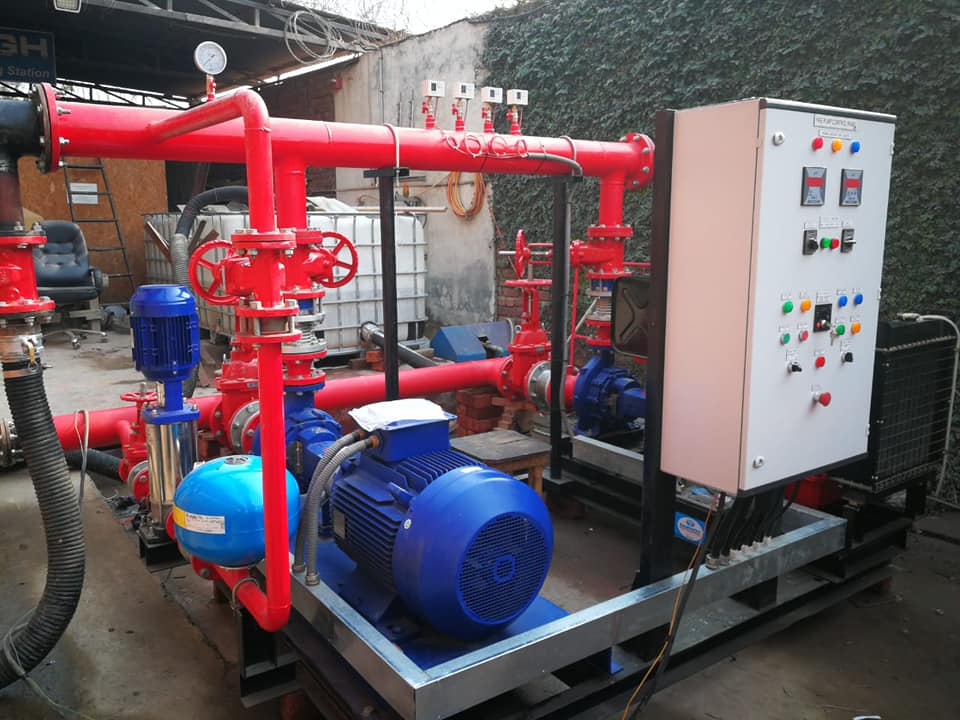
Active Power Engineering Services Pvt. Ltd. (APES Engineering) is one of Pakistan’s most trusted providers of professional fire fighting systems. With over 15 years of experience delivering life safety and fire suppression solutions to businesses, hospitals, schools, factories, shopping malls, and government institutions across Lahore, Karachi, and Islamabad — we understand that when it comes to fire safety, there is absolutely no room for compromise.
A fire can destroy in minutes what took years to build. It can end lives, wipe out livelihoods, and permanently damage the reputation of even the most established organizations. Yet despite this, fire fighting systems remain one of the most underinvested areas of safety infrastructure in Pakistan — and that is a risk no responsible business owner, facility manager, or property developer should be willing to accept.
APES Engineering is here to change that — one building, one facility, and one protected life at a time.
Why Fire Fighting Systems Are Critical in Pakistan
Pakistan has witnessed devastating fire incidents in recent years that have claimed lives and caused billions of rupees worth of damage. From factory fires in industrial zones of Lahore and Karachi to commercial building blazes in busy city centers — the consequences of inadequate fire protection are visible and real.
The garment factory fire in Baldia Town, Karachi remains one of the deadliest industrial fire disasters in Pakistan’s history — and it was a tragic reminder of what happens when fire safety systems are absent or inadequate. Similarly, hospital fires, school building incidents, and warehouse blazes across Punjab and Sindh have highlighted how vulnerable our built environment remains.
The causes are well known: lack of automatic suppression systems, no early detection, blocked emergency exits, untrained staff, and buildings that were simply never designed with fire safety in mind. All of these are solvable problems — with the right fire fighting system and the right installation partner.
Pakistan’s National Building Code and local fire safety regulations require fire fighting systems in commercial, industrial, and high-rise buildings. The Lahore Development Authority (LDA), Karachi Development Authority (KDA), and Capital Development Authority (CDA) all enforce fire safety compliance as part of building approval processes. Yet compliance alone is not the goal — genuine life safety is.
At APES Engineering, we go beyond minimum compliance. We design and install fire fighting systems that truly protect — systems that work reliably when they are needed most.
What Is a Fire Fighting System?
A fire fighting system is an integrated network of equipment, piping, detection devices, and suppression agents designed to detect a fire, alert occupants, and actively suppress or extinguish the fire — all as quickly as possible and often automatically, before the fire brigade even arrives.
Modern fire fighting systems are far more sophisticated than a simple fire extinguisher on the wall. They are engineered life safety systems that work around the clock, every day of the year, to protect your building and everyone inside it.
A complete fire fighting system typically includes water supply infrastructure, distribution pipework, suppression heads or nozzles, fire detection and alarm systems, control panels, pumping systems, and in some cases specialized suppression agents for environments where water would cause additional damage — such as server rooms, generator areas, and chemical storage facilities.
APES Engineering designs, supplies, installs, tests, and maintains all of these components as part of a fully integrated fire fighting solution.
Our Complete Fire Fighting System Services in Pakistan
1. Fire Fighting System Design and Engineering
Every effective fire fighting system begins with a proper engineering design. APES Engineering’s fire safety engineers conduct a thorough assessment of your building or facility — studying the floor plans, occupancy type, fire load, hazard classification, water supply availability, and local authority requirements.
Based on this assessment, we produce a complete fire fighting system design that specifies the type of system, pipe sizing and layout, sprinkler or nozzle placement, pump specifications, water storage requirements, and control system architecture — all in compliance with NFPA (National Fire Protection Association) standards, which are internationally recognized and widely adopted in Pakistan’s construction and engineering sector.
Our designs are detailed, fully documented, and submitted for authority approvals where required — giving our clients a clear, approved plan before any physical work begins.
2. Wet Pipe Sprinkler Systems — The Most Reliable Automatic Suppression Solution
The wet pipe sprinkler system is the most widely used automatic fire suppression system in the world — and for good reason. It is simple, reliable, and fast-acting.
In a wet pipe system, the sprinkler pipes are always filled with pressurized water. When a fire occurs and the heat activates a sprinkler head, water discharges immediately — directly onto the fire, right at the point of origin. This immediate response is what makes wet pipe sprinkler systems so effective at containing fires before they spread.
APES Engineering designs and installs wet pipe sprinkler systems for a wide range of building types across Pakistan — from office buildings and hotels to retail stores, warehouses, and apartment complexes. Our systems use high-quality sprinkler heads, schedule-rated pipework, and properly sized pump sets to ensure reliable performance.
3. Dry Pipe Sprinkler Systems — For Cold and Unheated Environments
In environments where pipes might be exposed to freezing temperatures — such as cold storage facilities, unheated warehouses, or outdoor covered areas — a wet pipe system is not suitable because the water inside would freeze and block the pipe.
Dry pipe sprinkler systems solve this problem by filling the pipes with pressurized air or nitrogen instead of water. When a sprinkler head activates, the air pressure releases, a dry pipe valve opens, and water flows into the pipes and out through the open sprinkler head.
APES Engineering designs and installs dry pipe systems for cold storage facilities, food processing plants, and other temperature-sensitive environments across Pakistan.
4. Pre-Action Sprinkler Systems — Protection for High-Value and Sensitive Areas
Pre-action systems add an extra layer of safety for environments where an accidental water discharge would cause as much damage as the fire itself — such as data centers, server rooms, museum archives, and library collections.
A pre-action system requires two independent events to occur before water is released: the fire detection system must detect a fire, and a sprinkler head must activate. This two-step process virtually eliminates the risk of accidental discharge while still providing fast, effective fire suppression when a real fire occurs.
APES Engineering has installed pre-action systems in data centers, IT rooms, and archive facilities across Lahore, Karachi, and Islamabad — protecting irreplaceable data and equipment from both fire and accidental water damage.
5. Deluge Systems — Total Coverage for High-Hazard Areas
Deluge systems are used in high-hazard environments where a fire can spread extremely rapidly — such as aircraft hangars, flammable liquid storage areas, chemical plants, transformer yards, and LPG storage facilities.
Unlike standard sprinkler systems where only the activated heads discharge water, a deluge system simultaneously opens all nozzles in the protected zone the moment the system activates — delivering a massive, instantaneous application of water or foam across the entire hazard area.
APES Engineering designs and installs deluge systems for industrial facilities, power plants, fuel storage areas, and other high-hazard locations across Pakistan — providing the aggressive, total-coverage suppression that these environments demand.
6. Fire Hydrant and Hose Reel Systems — Manual Firefighting Infrastructure
While automatic suppression systems work without human intervention, fire hydrant and hose reel systems provide the tools that building occupants and the fire brigade need to fight fires manually.
Fire hydrant systems consist of a network of pipes, pumps, and hydrant outlets — both internal landing valves inside the building and external hydrant pillars around the perimeter — that give firefighters access to large volumes of water at the pressure needed to tackle a serious fire.
Hose reel systems provide smaller-diameter hoses at regular intervals throughout a building, giving occupants a first-response tool to tackle small fires before they grow.
APES Engineering designs, supplies, and installs complete fire hydrant and hose reel systems in commercial buildings, industrial facilities, hospitals, hotels, and high-rise developments across Pakistan — meeting LDA, KDA, and CDA requirements for fire service access.
7. Foam Suppression Systems — For Flammable Liquid Hazards
Water alone is not effective — and can actually be dangerous — when fighting fires involving flammable liquids such as petroleum products, solvents, and chemicals. In these situations, foam suppression systems are the correct solution.
Foam systems work by blanketing the surface of a flammable liquid with a layer of foam, cutting off the oxygen supply and preventing the release of flammable vapors. APES Engineering designs and installs foam suppression systems for petroleum storage facilities, fuel farms, aviation refueling areas, and chemical processing plants across Pakistan.
8. Clean Agent Fire Suppression Systems — Protecting Electronics and Sensitive Equipment
For environments where water or foam would destroy the very assets being protected — such as server rooms, data centers, UPS rooms, control rooms, and medical equipment areas — clean agent suppression systems are the ideal solution.
Clean agent systems use gaseous suppression agents — such as FM-200 (HFC-227ea), Novec 1230, or inert gas blends — that extinguish fires by chemically interrupting the combustion process or reducing oxygen levels, without leaving any residue and without damaging sensitive electronics.
APES Engineering has extensive experience designing and installing clean agent suppression systems for IT infrastructure environments, telecommunications facilities, banking operations centers, and industrial control rooms across Pakistan.
9. Fire Pumping Systems — The Heart of Your Fire Fighting Infrastructure
Every water-based fire fighting system depends on a reliable pumping system to deliver water at the required pressure and flow rate. A fire pump that fails at the critical moment is as dangerous as having no system at all.
APES Engineering designs and installs complete fire pump sets comprising electric-driven main pumps, diesel-driven backup pumps, and jockey pumps for pressure maintenance — all in compliance with NFPA 20 standards. Our pump room designs include proper suction arrangements, pressure gauges, test connections, and automatic controllers that ensure the pumping system springs into action the moment it is needed.
10. Underground and Overhead Water Storage Tanks
A fire fighting system is only as reliable as its water supply. APES Engineering designs and installs dedicated fire water storage tanks — both underground concrete tanks and elevated overhead tanks — sized to provide the required volume of water for the full duration of a fire fighting operation.
We also install proper tank fill arrangements, level indicators, dedicated fire service connections, and anti-contamination measures to ensure your fire water supply is always ready and uncompromised.
11. Fire Fighting System Testing and Commissioning
Installing a fire fighting system is only half the job. Before any system is handed over, APES Engineering conducts comprehensive testing and commissioning to verify that every component performs exactly as designed.
Our commissioning process includes hydrostatic pressure testing of pipework, pump performance testing against design curves, sprinkler head flow testing, alarm and detection integration testing, and full system functional testing under simulated fire conditions. We provide complete test certificates and commissioning reports that document system performance and support authority approvals and insurance requirements.
12. Fire Fighting System Maintenance and Annual Inspection
A fire fighting system that is not regularly maintained will not perform reliably in an emergency. Pakistani regulations and international standards both require periodic inspection and testing of fire fighting systems — and for very good reason.
APES Engineering offers comprehensive maintenance programs for fire fighting systems — including quarterly inspections, annual full-system tests, sprinkler head replacement schedules, pump overhaul services, and emergency call-out response. Our maintenance contracts give facility managers the confidence of knowing their fire protection systems are always in peak operating condition.
Industries and Building Types We Serve Across Pakistan
APES Engineering has delivered fire fighting system projects across a wide range of sectors throughout Lahore, Karachi, Islamabad, and other major cities:
- Commercial Office Buildings — Protecting employees, tenants, and business assets in multi-story office developments
- Shopping Malls and Retail Centers — Life safety systems for high-occupancy retail environments across Pakistan’s growing mall sector
- Hospitals and Healthcare Facilities — Critical fire protection for patients, staff, and irreplaceable medical equipment
- Hotels and Hospitality — Guest safety systems for five-star hotels, boutique properties, and serviced apartments
- Industrial Factories and Warehouses — Heavy-duty suppression systems for manufacturing plants, storage facilities, and logistics hubs
- Educational Institutions — Protecting students and staff in schools, colleges, and universities
- Data Centers and IT Facilities — Specialized clean agent systems safeguarding critical digital infrastructure
- Fuel Storage and Petroleum Facilities — Foam and deluge systems for flammable liquid hazards
- High-Rise Residential Buildings — Complete hydrant, hose reel, and sprinkler systems for apartment towers
- Government Buildings and Public Institutions — Compliant fire protection for public sector facilities across Pakistan
Why Choose APES Engineering for Fire Fighting Systems in Pakistan?
15+ Years of Fire Safety Expertise — We have been designing and installing fire fighting systems across Pakistan for over a decade and a half. Our experience spans virtually every building type and fire hazard category.
NFPA-Compliant Engineering — All our fire fighting system designs follow NFPA standards — the globally recognized benchmark for fire protection engineering — ensuring your system meets both international best practices and local regulatory requirements.
Complete In-House Capability — From initial fire risk assessment and system design through to equipment supply, installation, testing, commissioning, and ongoing maintenance — APES Engineering handles everything under one roof. You deal with one accountable partner, not a chain of subcontractors.
Authority Liaison and Compliance Support — We handle all coordination with LDA, KDA, CDA, and other local authorities for fire system plan approvals, inspections, and completion certificates — taking the regulatory burden off your shoulders.
Quality Equipment and Materials — We supply fire fighting equipment from internationally recognized brands that meet UL (Underwriters Laboratories) and FM (Factory Mutual) approval standards — the gold standard for fire protection equipment quality.
Nationwide Service Coverage — With offices in Lahore, Karachi, and Islamabad, and the capability to mobilize teams anywhere in Pakistan, we serve clients from Peshawar to Gwadar and everywhere in between.
Post-Installation Support — Our relationship with clients extends well beyond project handover. Through structured maintenance agreements and 24/7 emergency support, we ensure your fire fighting system remains fully operational and compliant year after year.
Common Fire Safety Mistakes Pakistani Businesses Make — And How We Help Avoid Them
Installing systems without proper engineering design — Many builders simply copy a generic pipe layout without proper hydraulic calculations. This results in systems that cannot deliver adequate water pressure and flow when needed. APES Engineering always starts with a proper hydraulic design.
Using substandard equipment to cut costs — Cheap sprinkler heads, low-quality pipes, and uncertified pumps may save money upfront but will fail at the critical moment. We only supply equipment that meets international quality standards.
Neglecting maintenance after installation — A fire system installed five years ago with zero maintenance is not a fire system — it is a liability. Our maintenance programs keep your system genuinely ready.
Designing systems only for compliance, not performance — Minimum compliance systems may satisfy an inspector but may not actually protect effectively. We design for real fire performance, not just paper approval.
No integration between fire fighting and fire detection systems — Suppression systems and detection/alarm systems must work together seamlessly. APES Engineering ensures full integration so that detection triggers suppression, alarms, and evacuation systems simultaneously.
Frequently Asked Questions
Is a fire fighting system legally required in Pakistan? Yes. Pakistan’s National Building Code, along with local authority regulations from LDA, KDA, and CDA, require fire fighting systems in commercial, industrial, high-rise, and public buildings. Non-compliance can result in building approvals being withheld, fines, and significant legal liability in the event of a fire incident.
How long does it take to install a fire fighting system? Installation timelines vary by building size and system complexity. A basic hose reel and hydrant system for a mid-sized commercial building can be completed in four to eight weeks. A full sprinkler system for a large facility may take three to six months from design to commissioning.
What is the difference between a fire fighting system and a fire protection system? Fire protection systems is the broader category that includes both passive protection (fire-resistant walls, doors, and materials) and active systems. Fire fighting systems specifically refer to the active suppression systems — sprinklers, hydrants, foam systems, and clean agent systems — that actively fight the fire. APES Engineering specializes in the active fire fighting systems.
Can you upgrade or extend our existing fire fighting system? Yes. We frequently assess and upgrade existing fire fighting systems — whether they need extension to cover new building areas, upgrading of outdated equipment, or correction of deficiencies identified during an inspection.
Do you provide fire risk assessments? Yes. Our fire safety engineers can conduct a comprehensive fire risk assessment of your facility — identifying hazards, evaluating existing protection measures, and recommending improvements to bring your building to the required level of protection.
Ready to Protect Your Building with a Professional Fire Fighting System in Pakistan?
Your building, your employees, your customers, and your assets deserve the best possible protection against fire. Whether you are constructing a new facility, upgrading an existing system, or simply ensuring your current fire protection meets the required standards — APES Engineering is the partner you can trust to get it right.
Contact our fire safety team today for a free consultation and fire risk assessment.
📞 Call: +92 42 35307284 | +92 339 4003849 📧 Email: info@apesengineering.com 🌐 Website: www.apesengineering.com