
Email Support
info@apesengineering.com
Call Support
+92 42 35307284, +92 339 4003849
Foam Fire Suppression System in Pakistan — Complete Guide by APES Engineering
Industries We Cover
- Data Centers
- Corporate Offices
- Telecom Facilities
- Government Projects
- Banks & Financial Institutions
- Healthcare & Education Facilities
Get in Touch
Need a reliable Foam Fire Suppression System in Pakistan?
Contact APES Engineering today for professional fire protection solutions designed to safeguard lives and assets.
+92 42 35307284
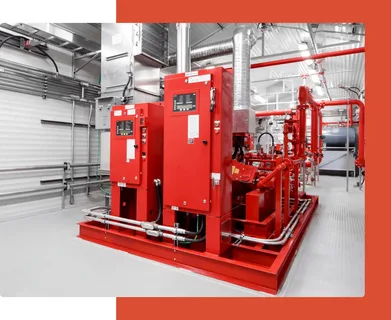
The First Line of Defence Against Flammable Liquid Fires in Pakistan’s Industrial Landscape
When fire breaks out in an oil storage tank, a fuel depot, an aircraft hangar, a petrochemical processing area, or a flammable liquid warehouse, water alone simply cannot do the job. Pouring water onto a burning hydrocarbon fire does not extinguish it — in many cases it makes the situation dramatically worse, spreading burning liquid across a wider area and potentially causing violent steam explosions that send burning fuel in every direction. The hazard is real, it is common across Pakistan’s industrial sector, and it demands a fundamentally different approach to fire suppression.
That approach is foam.
Foam Fire Suppression Systems in Pakistan have become an essential component of fire safety infrastructure across some of the country’s most hazardous industrial environments — from Karachi’s oil refineries and port fuel terminals to Punjab’s industrial zones, from aviation fuel facilities at Pakistan’s international airports to the chemical manufacturing plants that power the national economy. Foam suppression is not a luxury upgrade or a specialist niche technology. For the environments it protects, it is the only appropriate tool — and getting the design, installation, and maintenance right is a matter of genuine life-safety significance.
At Active Power Engineering Services Pvt. Ltd. (APES Engineering), we have spent over 15 years delivering fire safety solutions to Pakistan’s most demanding industrial, commercial, and institutional clients. Our foam fire suppression capability is an integral part of that expertise — combining deep technical knowledge of foam suppression engineering with our broader fire detection portfolio, which includes HOCHIKI fire detection system, Honeywell by Gent, VESDA by Xtralis, VES fire detection system, PEMALL USA, TNA UK, SG Fire System, and SOLOARTI — to create complete, integrated fire safety solutions for hazardous environments across the country.
This comprehensive guide covers everything you need to know about foam fire suppression systems — the science, the technology, the applications, the design principles, and the reasons APES Engineering is Pakistan’s trusted partner for this critical safety technology.
Key Benefits of Foam Fire Suppression Systems
Rapid suppression of flammable liquid fires
Prevents fire re-ignition and spread
Highly effective for fuel and chemical hazards
Reduced water damage compared to traditional systems
Compliance with international fire safety standards
Reliable protection for high-risk environments
Facilities in Karachi, Lahore, and Islamabad rely on foam suppression systems for critical fire safety.
What is a Foam Fire Suppression System?
A foam fire suppression system is a fixed or semi-fixed fire extinguishing installation that generates and delivers firefighting foam — a stabilised mass of small air-filled bubbles — onto a burning or potentially ignitable flammable liquid surface to extinguish the fire and prevent re-ignition.
Firefighting foam works through a combination of mechanisms that, together, make it extraordinarily effective against flammable liquid fires:
Smothering — The foam blanket covers the surface of the burning liquid, cutting off the supply of oxygen that sustains combustion. No oxygen reaches the fuel surface, and the fire is starved of the oxidiser it needs to continue.
Cooling — The water content of foam — typically 94 to 99.9 percent of foam solution by volume — absorbs heat from the burning surface, reducing the fuel temperature and slowing the rate of vapour generation.
Vapour suppression — The stable foam blanket, once established, continues to suppress flammable vapour generation from the fuel surface even after the visible fire is extinguished — preventing re-ignition from hot surfaces, residual ignition sources, or sparks.
Fuel separation — The foam physically separates the burning fuel from the air, and in the case of certain foam types, from the water in the foam solution itself — preventing fuel-water mixing that could create hazardous conditions with water-miscible fuels.
The result is a suppression mechanism that is uniquely suited to flammable liquid fires — one that extinguishes the active fire, prevents re-ignition, and maintains a protective blanket over the hazard area for an extended period after discharge.
The Science of Firefighting Foam — Understanding the Chemistry
Not all foam is the same, and understanding the different foam types and their specific properties is essential to specifying the right foam system for each application. APES Engineering’s foam system designs are always based on careful selection of the appropriate foam concentrate for the specific fuel and application involved.
Aqueous Film-Forming Foam (AFFF)
AFFF is historically the most widely used foam type in industrial fire protection globally. It works through a dual mechanism — forming both a physical foam blanket over the fuel surface and an aqueous film beneath the foam that spreads rapidly across the fuel surface ahead of the foam front, suppressing vapour generation and cutting off oxygen supply with extraordinary speed.
AFFF is effective against Class B fires involving hydrocarbons — gasoline, diesel, jet fuel, crude oil, and similar petroleum-based fuels — and provides very fast knockdown of large flammable liquid fires. It has been the standard specification for aviation fuel facility protection, petroleum storage tank protection, and fuel loading rack protection for decades.
However, AFFF concentrates containing per- and polyfluoroalkyl substances (PFAS) are facing increasing regulatory scrutiny globally due to environmental persistence concerns. APES Engineering advises clients on the evolving regulatory landscape for AFFF and on fluorine-free alternatives where appropriate for their specific application and regulatory context.
Fluoroprotein Foam (FP) and Film-Forming Fluoroprotein Foam (FFFP)
Fluoroprotein foam combines a protein foam base with fluorochemical surfactants to produce a foam with excellent fuel resistance and fast knockdown characteristics. FFFP adds aqueous film-forming capability to the fluoroprotein base, combining the heat resistance and fuel tolerance of protein foam with the speed of AFFF.
These foam types are particularly well-suited for subsurface injection into fixed-roof storage tanks, where their fuel tolerance allows them to pass through the stored fuel to the surface without breaking down or picking up fuel contamination.
Protein Foam (P)
Protein foam — made from hydrolysed natural proteins (animal or plant based) with stabilising additives — produces a dense, stable foam blanket with excellent heat resistance and burnback resistance. Its primary application is in fixed tank protection where long-term burnback resistance is important. However, protein foam is slower to spread than synthetic foam types and has been largely replaced by AFFF and FFFP for most modern applications.
Alcohol-Resistant Aqueous Film-Forming Foam (AR-AFFF)
Standard AFFF is not effective against water-miscible fuels — alcohols, ketones, esters, and other polar solvents that are common in chemical manufacturing and pharmaceutical production. When applied to these fuels, standard foam quickly breaks down as the water-miscible fuel absorbs water from the foam structure.
AR-AFFF (also called alcohol-resistant, or AR foam) contains a polymeric additive that forms a protective membrane between the foam and the water-miscible fuel surface, preventing foam destruction. AR-AFFF is essential for facilities handling polar solvents — chemical plants, pharmaceutical manufacturing, biofuel production, and similar operations — and is the standard specification for facilities handling mixed fuel types where both hydrocarbon and polar solvent hazards are present.
High-Expansion Foam
High-expansion foam is produced using high-expansion foam generators that entrain large volumes of air into the foam solution, producing foam with expansion ratios of 200:1 to 1000:1 — meaning one litre of foam solution generates 200 to 1000 litres of finished foam. This extraordinary expansion capability allows high-expansion foam to rapidly fill large enclosed spaces — warehouses, basement areas, engine rooms, mine tunnels — with a foam mass that suppresses fire by smothering, cooling, and vapour suppression throughout the entire volume.
High-expansion foam is the standard protection system for large unsprinklered warehouse spaces, aircraft hangars, LNG pump rooms, and similar large-volume enclosed hazards. APES Engineering has extensive experience designing high-expansion foam systems for warehouse and hangar applications across Pakistan.
Medium-Expansion Foam
Medium-expansion foam — with expansion ratios of 20:1 to 200:1 — provides a balance between the fast-spreading, liquid-applied characteristics of low-expansion foam and the volume-filling capability of high-expansion foam. It is commonly used for bunded area protection, loading rack protection, and open-sided building applications.
Low-Expansion Foam
Low-expansion foam — with expansion ratios below 20:1, typically 6:1 to 10:1 — is the standard foam type for most industrial applications: storage tank protection, loading rack systems, helipad systems, and open-area deluge systems. It is applied through foam makers, foam chambers, foam pourers, and sprinkler/spray nozzles designed to generate foam at the application point.
Types of Foam Fire Suppression Systems
The configuration of a foam fire suppression system depends on the hazard being protected, the required application rate and method, and the operational context of the facility. APES Engineering designs and installs all major foam system configurations.
Fixed Foam Systems — Storage Tank Protection
Fixed foam systems for storage tanks are permanently installed, with foam delivery equipment integral to the tank structure. The two primary fixed system configurations are:
Top of Shell Foam Application (Surface Application) — Foam is delivered to the surface of the liquid in the tank through foam chambers mounted on the tank shell, typically near the top. When the system activates, foam flows through the chamber and onto the liquid surface, spreading from the application point across the entire surface to form a complete blanket. This is the standard configuration for fixed-roof tanks and is also used for external floating roof tanks where rim-seal fire protection is required.
Subsurface Foam Injection — Foam is injected into the bottom of the tank through the product inlet piping and rises through the stored liquid to the surface. This approach is used for fixed-roof tanks containing hydrocarbons where top-of-shell application is impractical, and for tanks where the risk of roof failure during a fire makes top application unreliable. The foam must be compatible with the stored product — fluoroprotein or FFFP concentrates are standard for subsurface injection.
Semi-Fixed Systems — Semi-fixed systems provide permanent foam delivery piping to the tank, with connection points for portable foam making equipment. They are less expensive than fully fixed systems and are appropriate where a mobile foam tender and trained response team can be relied upon for final activation.
Foam Deluge Systems
Foam deluge systems are analogous to water deluge systems — open nozzles or sprinklers connected to a pipe network, with a deluge valve that releases foam solution simultaneously through all nozzles when the system activates. They are used for bunded storage areas, loading rack protection, transformer bund protection, and large open-area hazards where rapid total coverage of the protected area is required.
Detection — typically provided by flame detectors, linear heat detection, or smoke detection systems from the APES Engineering portfolio — triggers the deluge valve, initiating foam discharge. Integration with Honeywell by Gent panels, HOCHIKI fire detection system controllers, or VES fire detection system equipment ensures that detection and suppression work seamlessly together.
Foam Spray Systems
Foam spray systems use directional spray nozzles designed to apply foam at specific application rates to three-dimensional hazards — the exterior surfaces of pressure vessels, the underside of elevated pipework, and complex equipment geometries where conventional flood application would not provide adequate coverage. They are commonly used for transformer protection, combined with bund protection systems for the oil containment area beneath the transformer.
Closed-Head Foam Sprinkler Systems
Closed-head foam sprinkler systems use standard automatic sprinkler heads connected to a foam solution supply, combining the automatic actuation capability of a conventional sprinkler system with the enhanced suppression performance of foam. When a sprinkler head fuses in response to heat, foam solution is discharged through that head — providing targeted foam application at the fire location.
Closed-head foam sprinkler systems are used in aircraft hangars, warehouses storing flammable liquids or high-value goods, and commercial facilities where the enhanced suppression performance of foam is required combined with the targeted, automatic actuation of a conventional sprinkler system.
High-Expansion Foam Systems
High-expansion foam systems for total flooding applications use high-expansion foam generators positioned at strategic locations within the protected space. When the system activates, generators produce foam at enormous volumes — filling the protected space from floor to ceiling in a matter of minutes.
For a large aircraft hangar or warehouse, this total flooding capability provides fire suppression throughout the entire protected volume simultaneously — unlike surface-applied low-expansion foam that must spread from application points to cover the entire area. The submersion of burning materials in foam provides rapid fire knockdown and cooling while preventing re-ignition.
Key Applications in Pakistan
APES Engineering’s foam fire suppression experience spans a diverse range of industries and facilities across Pakistan. These are the environments where foam suppression is essential.
Oil Refineries and Petrochemical Plants
Pakistan’s oil refining sector — centred on facilities near Karachi operated by major companies including PARCO, NRL, and ARL — represents some of the country’s highest-consequence fire hazards. Atmospheric storage tanks holding millions of litres of crude oil, gasoline, diesel, jet fuel, and chemical intermediates require fixed foam protection systems designed to the most rigorous international standards.
APES Engineering’s foam system designs for refinery and petrochemical applications follow NFPA 11 (Standard for Low-, Medium-, and High-Expansion Foam) and applicable international standards, ensuring that every system delivers the foam application rate, coverage, and burnback resistance required to protect these critical national assets.
The detection layer for refinery foam systems typically combines ultraviolet/infrared flame detectors for fast-acting flame detection in process areas with aspirating smoke detection from VESDA by Xtralis in control rooms and enclosed equipment areas, providing a complete detection framework that triggers the appropriate suppression response for each hazard zone.
Fuel Storage Depots and Tank Farms
Fuel storage depots — PSO, Shell, Total, Hascol, and private operator facilities throughout Pakistan — maintain large inventories of petroleum products in atmospheric storage tanks. Tank farm fire protection requires a combination of fixed tank foam systems for individual tank protection and supplementary foam monitors and handline provisions for responding to spill fires and other area hazards.
APES Engineering has designed and installed foam protection systems for fuel storage facilities across Pakistan, working within the space and operational constraints of existing tank farms to deliver effective, code-compliant protection.
Aviation Fuel Facilities and Airports
Aircraft fuelling facilities at Pakistan’s international airports — Karachi’s Jinnah International Airport, Lahore’s Allama Iqbal International Airport, Islamabad’s New Islamabad International Airport, and others — handle jet fuel (Jet A-1) in large quantities and require foam fire protection systems meeting International Civil Aviation Organisation (ICAO) and Civil Aviation Authority of Pakistan (CAAP) requirements.
Aircraft hangars require particularly sophisticated foam systems — typically high-expansion foam for total flooding of the hangar volume combined with low-expansion foam monitors for apron and ramp areas — designed to provide rapid fire knockdown capability for the most demanding fire scenarios involving large commercial aircraft.
APES Engineering’s aviation sector foam system experience encompasses both fuelling facility protection and hangar fire suppression, delivering systems that satisfy the stringent requirements of aviation regulatory frameworks.
Power Transformer Protection
High-voltage power transformers — critical components of Pakistan’s national electricity grid and of major industrial and commercial facilities — contain large volumes of insulating oil that presents a significant fire risk. Transformer fires release enormous amounts of energy, and the consequences of a transformer fire extend far beyond the immediate asset loss — disrupting power supply to wide areas and causing cascading failures throughout the grid.
Foam spray systems protecting transformer bund areas — delivering foam solution onto the transformer surfaces and into the oil containment bund — are the standard protection measure for large power transformers in Pakistan. Combined with oil containment bunding and drainage provisions, foam spray systems contain transformer fires rapidly and prevent oil fires spreading beyond the immediate bund area.
APES Engineering integrates transformer foam spray systems with the broader facility fire alarm system — Honeywell by Gent or HOCHIKI fire detection system panels — ensuring that transformer fire events are immediately communicated to control room operators and relevant emergency response resources.
Chemical Manufacturing and Storage
Pakistan’s chemical manufacturing sector — fertiliser plants, pharmaceutical chemical synthesis, paint and coating manufacturing, and specialty chemical production — handles a diverse range of flammable and combustible liquids that require foam suppression protection.
The critical design consideration for chemical sector foam systems is compatibility between the foam concentrate and the stored chemicals. Standard AFFF performs poorly on polar solvents and water-miscible chemicals — making AR-AFFF the essential specification for chemical plants handling alcohols, ketones, esters, and similar materials. APES Engineering’s chemical sector foam designs are always based on a thorough chemical inventory and foam concentrate compatibility analysis, ensuring that the specified foam will perform effectively against the actual hazards present.
Warehouses and Logistics Facilities
Large warehouses storing flammable or combustible goods — paint and coatings, aerosol products, plastics, rubber goods, and general merchandise with significant combustible content — require enhanced fire suppression capability beyond standard sprinkler systems.
High-expansion foam systems provide particularly effective protection for large warehouse volumes, rapidly filling the space with foam that submerges burning materials and prevents fire spread. Combined with early smoke detection using HOCHIKI fire detection system addressable detectors, SG Fire System conventional detectors in lower-risk zones, or PEMALL USA components in US-specification projects, high-expansion foam systems create a complete warehouse fire safety solution.
Marine and Port Facilities
Karachi Port and Port Qasim — Pakistan’s two major commercial ports — and the developing Gwadar Port handle petroleum products, chemicals, and other hazardous cargoes that require foam fire protection in loading and storage areas. Marine applications present particular design challenges due to the marine environment’s corrosive effects on equipment, the requirement for compatibility with both hydrocarbon and chemical cargoes, and the need for systems that function reliably with minimal maintenance in remote or exposed locations.
APES Engineering’s foam system designs for marine and port applications use materials and configurations appropriate for the marine environment, ensuring reliable long-term performance in Pakistan’s demanding coastal conditions.
Foam System Design — The Engineering Behind Effective Protection
Designing an effective foam fire suppression system is one of the more demanding disciplines in fire safety engineering. It requires deep knowledge of foam chemistry, hydraulic engineering, hazard analysis, and applicable standards — combined with practical experience of what works in real-world installations. APES Engineering’s foam system design process is rigorous, systematic, and grounded in international engineering standards.
Hazard Analysis and Foam Concentrate Selection
Every foam system design begins with a thorough analysis of the fire hazard — the fuel types, quantities, and storage configuration; the potential fire scenarios; the environmental and operational conditions; and the consequences of system failure. Based on this analysis, the appropriate foam concentrate type is selected — AFFF, AR-AFFF, FFFP, protein, or high-expansion — and the required application rate is determined from the applicable standard (NFPA 11, EN 13565, or equivalent).
Hydraulic Design
Foam systems are hydraulic systems — the foam solution must be delivered to every nozzle or application device at the correct flow rate and pressure to generate foam at the specified quality and application rate. Hydraulic calculations are performed for every pipe run in the system, verifying that pressure losses through pipework, fittings, and equipment are within acceptable limits and that the pump system delivers adequate flow and pressure to the most hydraulically demanding point in the system under all design conditions.
APES Engineering uses hydraulic calculation software to model foam system performance, ensuring that every design is hydraulically validated before installation begins.
Foam Proportioning System Selection
The proportioning system — the equipment that blends foam concentrate with water at the correct ratio (typically 1%, 3%, or 6% concentrate in water) — is a critical component of the foam system. Different proportioning technologies are appropriate for different system sizes and applications:
Bladder Tank Proportioners — A rubber bladder inside a pressure vessel contains the foam concentrate, which is displaced into the water supply by the water pressure surrounding the bladder. Simple, reliable, and requiring no external power, bladder tanks are the standard proportioning method for fixed system applications.
Balanced Pressure Proportioners — A pump-driven balanced pressure system maintains equal pressure on the foam concentrate supply and the water supply, providing accurate proportioning across a wide range of flow rates. Used for large or complex systems where multiple hazard areas with different flow requirements must be served from a single foam supply.
In-Line Inductors (Venturi Proportioners) — Venturi inductors use the pressure differential in flowing water to draw foam concentrate into the waterway at the correct proportion. Simple and inexpensive, they are used for portable equipment and small fixed system applications.
Detection and Actuation System Integration
The detection system that triggers foam system activation must be specified to match the response speed, reliability, and false alarm tolerance requirements of the specific application. For refinery and petrochemical applications, UV/IR flame detectors provide very fast, highly reliable activation. For warehouse and logistics applications, addressable smoke detectors from HOCHIKI, VES, or Honeywell by Gent platforms provide reliable activation with appropriate false alarm management.
APES Engineering designs the complete detection-to-actuation logic for every foam system — from the detector signal processing and alarm confirmation requirements through to the deluge valve actuation, pump start sequences, and alarm notification outputs that constitute the complete system response.
Manual Override and Control Provisions
Every foam system requires manual actuation capability — allowing trained fire response personnel to initiate foam discharge manually when required. Manual control stations, pump control panels, and remote manual actuation points are designed and positioned as part of every APES Engineering foam system installation.
Detection Integration — Creating a Complete Fire Safety Solution
A foam fire suppression system is only as effective as the detection system that activates it. APES Engineering’s unique capability to design and integrate both the suppression and detection layers of a fire safety system means our clients receive a genuinely complete, engineered solution rather than separate suppression and detection systems that must be integrated after the fact.
Our detection portfolio supports foam system integration across every application:
HOCHIKI fire detection system — Addressable detection for enclosed warehouse and logistics applications with foam suppression.
Honeywell by Gent — Comprehensive fire alarm panel and detection system integration for complex industrial facilities with multi-zone foam system configurations.
VESDA by Xtralis — Aspirating smoke detection in enclosed control rooms, offices, and administration buildings within hazardous area facilities — providing early warning in non-hazardous spaces adjacent to foam-protected industrial areas.
VES fire detection system — Versatile conventional and addressable detection for mid-scale commercial and industrial foam system applications.
PEMALL USA — American-standard detection for projects requiring US-specification compliance alongside NFPA 11 foam system design.
TNA UK — British Standards compliant detection integrated with foam systems designed to EN 13565 and BS standards.
SG Fire System — Cost-effective conventional detection for lower-risk ancillary areas within facilities with foam-protected primary hazard zones.
SOLOARTI — Smart system integration for modern industrial facilities where foam system status, detection alarms, and building management are unified on a single intelligent platform.
Foam System Maintenance — Protecting Long-Term Performance
A foam fire suppression system represents a significant investment in safety infrastructure, and regular professional maintenance is essential to ensure it performs correctly when needed.
APES Engineering’s foam system maintenance programme covers all aspects of system health and readiness.
Annual Foam Concentrate Testing — Foam concentrate quality degrades over time, particularly if stored under adverse conditions. Annual samples are tested for concentration, refractive index, expansion ratio, and drainage time to verify that the concentrate remains within specification.
Quarterly System Inspection — Visual inspection of all system components — pipe network, deluge valves, foam chambers, nozzles, detection devices, pump and controller — to identify any physical damage, corrosion, or deterioration requiring attention.
Annual Functional Testing — Detection and actuation sequences are functionally tested, with foam generation verified through controlled discharge tests (using water only, or with foam concentrate to verify proportioning performance).
Pipe Network Flushing and Inspection — Periodic flushing of foam system pipework to identify and remove any blockages, corrosion deposits, or contamination that could impair performance.
Pump and Driver Maintenance — Annual maintenance of foam system pumps, drivers (diesel or electric), and associated control equipment in accordance with manufacturer specifications.
APES Engineering’s SLA clients across Pakistan receive all maintenance services as part of a documented, scheduled programme — with full maintenance records provided for compliance documentation and insurer requirements.
Foam System Standards and Compliance
APES Engineering designs foam fire suppression systems to internationally recognised standards applicable to the specific system type and hazard:
NFPA 11 — Standard for Low-, Medium-, and High-Expansion Foam, the primary international standard governing foam system design, installation, testing, and maintenance.
NFPA 409 — Standard on Aircraft Hangars, governing fire protection requirements for hangar applications including foam system design.
EN 13565 — European standard for fixed firefighting systems with foam, applicable for projects with European specifications.
ICAO/CAAP Standards — International Civil Aviation Organisation and Civil Aviation Authority of Pakistan standards for aviation fuel facility and aircraft hangar fire protection.
API Standards — American Petroleum Institute standards for petroleum storage tank fire protection, widely referenced in Pakistan’s oil and gas sector.
National Building Code of Pakistan — Applicable provisions for fire suppression systems in buildings across all occupancy categories.
Why APES Engineering is Pakistan’s Trusted Partner for Foam Suppression
Choosing the right fire safety engineering partner for a foam suppression system project is a decision that carries significant safety, financial, and reputational weight. APES Engineering’s combination of technical expertise, multi-system capability, and genuine commitment to client safety makes us the right choice for Pakistan’s most demanding foam suppression projects.
Our 15 years of experience across Pakistan’s oil and gas, power, chemical, aviation, and industrial sectors means we understand the specific hazards, operational constraints, and regulatory environment of each industry we serve. We do not approach foam system design as a generic exercise — every project receives a tailored, expert engineering solution appropriate to its specific hazards and requirements.
Our nationwide presence across Lahore, Karachi, and Islamabad — with field engineering teams covering all regions of Pakistan — means we can deliver, install, commission, and maintain foam suppression systems wherever our clients operate in the country.
And our integrated fire safety capability — combining foam suppression engineering with our full detection portfolio spanning HOCHIKI, VESDA by Xtralis, Honeywell by Gent, VES, PEMALL USA, TNA UK, SG Fire System, and SOLOARTI — means we deliver complete fire safety solutions, not just standalone suppression systems.
Get Your Free Foam Suppression Consultation
If your facility handles flammable liquids, petroleum products, chemicals, or other high-hazard materials — or if you are constructing a new industrial, energy, or aviation facility in Pakistan — contact APES Engineering today for a free, no-obligation consultation and site assessment.
Head Office — Lahore 2nd Floor, 32-Main Ali Town, Near Ali Park, Raiwind Road, Lahore 📞 (92) 42-35307284
Islamabad Office House #59, Street #81, Sector I-14/4, Islamabad 📞 (92) 51-270 81 24
Karachi Office R-30, Gulshan-e-Qadri, Phase 3, Shah Faisal Colony, Karachi 📞 (92) 323-403 8826