
Email Support
info@apesengineering.com
Call Support
+92 42 35307284, +92 339 4003849
Fire Detection Systems in Pakistan — Complete Guide by APES Engineering
Industries We Cover
- Data Centers
- Corporate Offices
- Telecom Facilities
- Government Projects
- Banks & Financial Institutions
- Healthcare & Education Facilities
Get in Touch
Looking for reliable Fire Detection Systems in Pakistan?
Contact APES Engineering today for professional fire safety solutions designed to protect lives and property.
+92 42 35307284
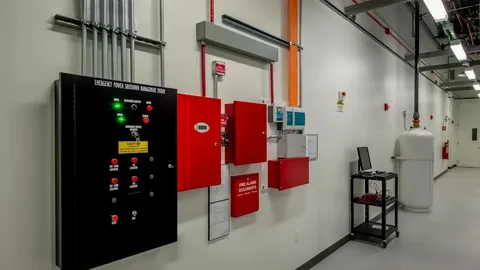
When we talk about safety in homes, offices, hospitals, factories, or shopping malls, one thing stands above everything else — the ability to detect danger before it’s too late. Fire is one of the most devastating threats any building can face, and in Pakistan’s rapidly growing urban and industrial landscape, the need for reliable fire detection systems in Pakistan has never been more urgent.
At Active Power Engineering Services Pvt. Ltd. (APES Engineering), we have spent over 15 years helping businesses, institutions, and homeowners across Lahore, Karachi, Islamabad, and beyond build safer environments. We don’t just sell fire detection equipment — we design, install, commission, and maintain complete fire safety ecosystems tailored to your specific needs.
This guide is your complete resource for understanding fire detection systems in Pakistan — what they are, how they work, why they matter, and how APES Engineering delivers the best solutions in the country.
What is a Fire Detection System and Why Does It Matter?
A fire detection system is a network of interconnected devices — smoke detectors, heat sensors, flame detectors, control panels, and alarm units — that work together to identify the early signs of fire and alert occupants before a small spark becomes a catastrophic blaze.
In Pakistan, fire incidents in factories, hospitals, shopping plazas, warehouses, and residential towers have caused enormous loss of life and property over the years. Many of these tragedies could have been prevented or significantly reduced with a properly installed fire detection and alarm system.
The reality is simple: early detection saves lives. A fire detected within the first two minutes gives occupants the time they need to evacuate safely and allows firefighting teams to respond before structural damage becomes irreversible. Without a detection system in place, that two-minute window disappears entirely.
Beyond the human cost, fire damage results in massive financial losses — disrupted business operations, destroyed inventory, regulatory penalties, and skyrocketing insurance claims. For businesses in Pakistan competing in tough economic conditions, the cost of not having a fire detection system is always far greater than the cost of installing one.
The State of Fire Safety in Pakistan
Pakistan’s construction and infrastructure sector is booming. From high-rise commercial towers in Karachi to industrial zones in Lahore and government complexes in Islamabad, the pace of development is impressive. However, fire safety awareness and compliance have not always kept pace with this growth.
According to Pakistan’s National Disaster Management Authority (NDMA) and various provincial fire departments, fire incidents in urban and industrial areas remain alarmingly frequent. Causes range from electrical short circuits and gas leaks to flammable material storage and lack of maintenance in aging buildings.
The good news is that awareness is growing. The National Building Code of Pakistan and increasing pressure from insurance providers, international partners, and regulatory bodies are pushing businesses and developers to invest in proper fire alarm systems in Pakistan, automatic fire detection, and comprehensive fire safety planning.
This is where APES Engineering steps in — bridging the gap between international fire safety standards and local implementation, making world-class fire detection technology accessible and practical for Pakistani clients.
How Fire Detection Systems Work
Before diving into specific products and brands, it helps to understand the core components of a modern fire detection system and how they function together.
1. Detectors — The Eyes and Nose of Your System
Detectors are the front-line devices that sense fire-related threats. There are several types:
Smoke Detectors — These are the most commonly used detectors. They sense smoke particles in the air using either ionisation or photoelectric technology. Photoelectric detectors are particularly effective for slow-smouldering fires that produce large amounts of smoke before a visible flame appears.
Heat Detectors — These devices trigger an alarm when the ambient temperature in a room rises beyond a set threshold or rises at an unusually rapid rate. They are ideal for environments like kitchens or factories where smoke detectors might produce false alarms.
Flame Detectors — These use optical sensors to detect the infrared or ultraviolet light signature of an open flame. They are commonly used in industrial settings, oil and gas facilities, and large open spaces.
Multi-Sensor Detectors — Advanced detectors that combine smoke, heat, and sometimes CO detection into a single unit, reducing false alarms and improving detection accuracy.
Aspirating Smoke Detectors (ASD) — These are highly sensitive systems that actively draw air samples from a space and analyse them for smoke particles. Ideal for data centres, clean rooms, and heritage buildings where early warning is absolutely critical.
2. The Fire Alarm Control Panel (FACP)
The control panel is the brain of the entire fire detection system. It receives signals from all connected detectors, processes the data, and triggers appropriate responses — sounding alarms, notifying fire departments, activating suppression systems, or controlling building functions like elevator recall and HVAC shutdown.
Modern control panels used by APES Engineering are addressable, meaning each detector has a unique address that the panel can identify individually. This allows the system to pinpoint the exact location of a fire within a building, dramatically improving response time.
3. Alarm Devices — Alerting Occupants
Once a threat is detected, the system must alert the people inside the building. Alarm devices include:
- Sounders and Sirens — Loud audible alerts that signal evacuation
- Visual Alarms (Strobes) — For environments with high noise levels or for hearing-impaired occupants
- Voice Evacuation Systems — Automated or operator-controlled voice messages guiding occupants to safety
4. Manual Call Points
These are strategically placed manual pull stations that allow any person who visually spots a fire to immediately trigger the alarm system, even before automatic detectors have activated.
5. Monitoring and Remote Notification
Modern fire detection systems can be integrated with building management systems (BMS), security platforms, and remote monitoring centres, ensuring that fire alerts are transmitted instantly to facility managers, security teams, and emergency services — even when no one is physically present in the building.
Types of Fire Detection Systems We Install
At APES Engineering, we work with both conventional and advanced addressable fire detection technologies, selecting the right system based on the size, complexity, and specific risk profile of each client’s facility.
Conventional Fire Detection Systems
Conventional systems divide a building into zones. When a detector in a particular zone is triggered, the control panel identifies which zone the alarm came from, but not the specific device. These systems are cost-effective and ideal for smaller buildings — residential properties, small offices, and retail shops.
Addressable Fire Detection Systems
In addressable systems, every single detector and device has a unique address. The control panel communicates with each device individually and can pinpoint the exact location of a triggered alarm. This is the preferred solution for large commercial buildings, hospitals, hotels, educational institutions, and industrial facilities across Pakistan.
Wireless Fire Detection Systems
Where cabling is difficult, impractical, or too disruptive — such as in heritage buildings, temporary structures, or sites undergoing renovation — wireless fire detection systems offer a reliable and cost-effective alternative. These systems communicate via radio frequency and are fully integrated with central control panels.
Aspirating Smoke Detection (ASD)
For environments requiring the highest level of sensitivity and the earliest possible warning, aspirating systems are unmatched. They detect smoke at concentration levels far below what conventional detectors can sense, making them indispensable in data centres, server rooms, museums, and pharmaceutical storage facilities.
World-Class Brands We Work With
One of the strongest competitive advantages APES Engineering holds is our partnerships with globally recognised, industry-leading fire detection brands. We don’t compromise on quality — because when it comes to fire safety, there is no room for cutting corners.
HOCHIKI Fire Detection System
HOCHIKI is a Japanese-origin global leader in fire detection technology with over a century of innovation behind its name. Their products are known for exceptional reliability, ultra-low false alarm rates, and longevity. The HOCHIKI fire detection system is widely used in commercial buildings, hospitals, airports, and industrial facilities around the world.
APES Engineering installs HOCHIKI’s complete range in Pakistan, including their advanced addressable detectors, loop controllers, and fire alarm panels. HOCHIKI’s photon technology ensures that both fast-flaming and slow-smouldering fires are detected with precision, while their durable build quality means the system continues performing reliably in Pakistan’s varied environmental conditions — from the humid coastal air of Karachi to the dry heat of Lahore summers.
VES Fire Detection System
The VES fire detection system is engineered for versatility and performance across a wide range of applications. With a strong reputation in commercial and industrial deployments, VES systems combine ease of installation with advanced functionality. Their addressable panels and detector range are designed to integrate seamlessly with other building safety systems, making them an excellent choice for large integrated projects.
APES Engineering recommends VES for clients who need a robust, scalable system with straightforward management interfaces — particularly in corporate offices, retail chains, and multi-floor commercial complexes across Pakistan.
VESDA by Xtralis
When early warning is not just preferred but absolutely critical, VESDA by Xtralis stands in a class of its own. VESDA — Very Early Smoke Detection Apparatus — is the world’s most widely used aspirating smoke detection system. It works by continuously drawing air through a pipe network and analysing it in a highly sensitive detection chamber, capable of identifying smoke at concentrations thousands of times lower than conventional detectors.
In Pakistan, where data centres, telecom infrastructure, pharmaceutical facilities, and banking server rooms require zero tolerance for fire risk, VESDA by Xtralis is the gold standard. APES Engineering has deployed VESDA systems across multiple high-security facilities in Lahore and Islamabad, providing clients with the confidence that any fire threat will be identified long before it poses a risk to people, data, or equipment.
Honeywell by Gent
The Honeywell by Gent fire detection range represents the very best of British engineering combined with Honeywell’s global innovation. Gent has been at the forefront of fire detection technology for decades, and its integration into the Honeywell ecosystem has only strengthened its product range and support network.
The Gent Vigilon addressable system, for example, is renowned for its flexibility, scalability, and intelligent event processing. It is widely specified in large and complex buildings — hospitals, universities, government buildings, and airports — where reliability and advanced functionality are non-negotiable.
APES Engineering is proud to offer Honeywell by Gent solutions to clients across Pakistan who demand the highest standards of fire safety technology backed by a globally trusted name.
PEMALL USA
PEMALL USA brings American engineering excellence to fire detection, offering a range of products designed for both commercial and industrial environments. PEMALL systems are known for their robust construction, user-friendly interfaces, and compatibility with a wide range of building systems.
For Pakistani industrial clients — manufacturing plants, logistics warehouses, food processing facilities, and oil storage sites — PEMALL USA’s products offer the durability and performance needed to operate effectively in demanding environments. APES Engineering integrates PEMALL solutions where American-standard specifications are required, particularly for clients with international partnerships or export-focused operations.
TNA UK
TNA UK fire detection solutions bring British safety standards directly to Pakistani projects. With a strong emphasis on compliance with BS 5839 fire detection standards and international equivalents, TNA UK products are particularly valued in projects where regulatory compliance and international certification are a priority.
APES Engineering recommends TNA UK systems for clients in the education sector, healthcare facilities, and public sector buildings where meeting national and international safety codes is both a legal requirement and a moral obligation.
SG Fire System
SG Fire System offers a comprehensive range of fire detection and alarm products that combine competitive pricing with solid performance — making them an excellent option for medium-scale commercial and residential projects where budget is a consideration without sacrificing essential safety.
SG Fire Systems are frequently deployed by APES Engineering in residential apartment complexes, mid-size office buildings, and retail outlets across Pakistan, providing reliable protection at a cost-effective price point. Their conventional and semi-addressable panel ranges are easy to manage and maintain, making them popular among building managers and facilities teams.
SOLOARTI
SOLOARTI rounds out APES Engineering’s fire detection brand portfolio with innovative products designed for modern, intelligent building applications. SOLOARTI’s systems are built with smart integration in mind — capable of connecting with building management systems, access control, and CCTV platforms to create a unified safety ecosystem.
For smart buildings, mixed-use developments, and technology-forward clients who want their fire detection system to be part of a broader intelligent infrastructure, SOLOARTI provides the modern, connected solution they need. APES Engineering has successfully integrated SOLOARTI systems in several new-build commercial projects in Lahore and Islamabad.
Industries We Serve Across Pakistan
APES Engineering has delivered fire detection systems across a remarkably diverse range of industries and building types throughout Pakistan. Our experience spans:
Healthcare and Hospitals — Fire safety in hospitals is uniquely complex. Patients cannot evacuate quickly. Sensitive medical equipment must be protected. Life-safety systems must function flawlessly under all conditions. We design and install addressable fire detection systems with staged evacuation capabilities and integration with hospital management systems.
Banking and Financial Institutions — Server rooms, data vaults, and customer-facing branches all require different levels of fire protection. We use VESDA aspirating systems for server rooms and robust addressable systems for branch networks.
Educational Institutions — Schools, colleges, and universities house large numbers of people, many of them young children. Our fire detection solutions for educational buildings prioritise clear, reliable alarms, simple evacuation procedures, and regular testing protocols.
Retail and Shopping Malls — High footfall environments with complex layouts require zoned, addressable systems that can direct specific evacuation routes during an emergency. We work with mall developers and retail chains across Lahore, Karachi, and Islamabad.
Industrial and Manufacturing — Factories, warehouses, and processing plants face elevated fire risks from machinery, flammable materials, and high-energy processes. We engineer industrial-grade detection systems using heat detectors, flame detectors, and aspirating systems as appropriate.
Hospitality — Hotels and Restaurants — Guest safety is paramount. Our hotel fire detection installations integrate with room management systems, public address systems, and elevator controls for comprehensive emergency response.
Government and Public Sector — We have successfully delivered fire safety projects for public sector buildings across Pakistan, ensuring compliance with national codes and providing robust, maintainable systems.
Telecom and Data Centres — In an increasingly digital Pakistan, data centres and telecom facilities require the very earliest possible warning. We deploy VESDA and other high-sensitivity systems to protect critical digital infrastructure.
Residential — Apartments and Housing — From affordable apartment blocks to luxury residential towers, we provide fire detection systems that meet building codes and genuinely protect residents.
Our Fire Detection System Installation Process
At APES Engineering, we follow a rigorous, structured process for every fire detection project — regardless of size. This ensures every system we deliver is fit for purpose, compliant, and built to last.
Step 1 — Site Survey and Risk Assessment
Our team begins with a thorough site survey, assessing the building layout, occupancy type, existing infrastructure, and specific fire risk factors. This is the foundation upon which the entire system design is built.
Step 2 — System Design and Engineering
Based on the survey findings, our engineers design a custom fire detection system. This includes detector placement, cable routing, panel location, zone mapping, and integration points with other building systems. We prepare detailed drawings and specifications for client review and approval.
Step 3 — Product Selection and Procurement
We recommend the most appropriate brand and product range from our portfolio — whether that is HOCHIKI, VESDA by Xtralis, Honeywell by Gent, VES, PEMALL USA, TNA UK, SG Fire System, or SOLOARTI — based on the client’s requirements, budget, and compliance needs. All products are sourced through authorised channels to guarantee authenticity and warranty.
Step 4 — Professional Installation
Our certified installation team carries out all cabling, device fitting, and panel installation with precision and care, minimising disruption to ongoing building operations wherever possible. We follow manufacturer installation guidelines and international standards throughout.
Step 5 — System Commissioning and Testing
Once installation is complete, every single device and function is individually tested and verified. The control panel is configured, zones are programmed, and the entire system is put through a full functional test to confirm it operates exactly as designed.
Step 6 — Client Training and Handover
We provide comprehensive training to the client’s facilities team on system operation, alarm response procedures, and basic maintenance tasks. We hand over full system documentation, including as-built drawings, device schedules, and maintenance records.
Step 7 — Ongoing Maintenance and SLA Support
Fire detection systems require regular maintenance to remain effective. APES Engineering offers tailored Service Level Agreements (SLAs) that include scheduled maintenance visits, priority response to faults, and annual compliance testing — keeping your system in peak condition year-round.
Compliance and Standards — What You Need to Know
In Pakistan, fire safety compliance is governed by a combination of national and provincial regulations, building codes, and increasingly, the requirements of international standards adopted by insurers and certifying bodies.
National Building Code of Pakistan (NBC) — The NBC includes provisions for fire safety systems in buildings across various occupancy categories. Compliance with the NBC is a legal requirement for all new construction.
NFPA Standards — Many international companies operating in Pakistan specify compliance with National Fire Protection Association (NFPA) standards, particularly NFPA 72 (National Fire Alarm and Signaling Code). APES Engineering has extensive experience designing and installing systems to NFPA specifications.
BS 5839 — British Standard 5839 governs fire detection and alarm systems for buildings. Projects with UK-based specifications or clients, particularly those using TNA UK or Honeywell by Gent products, are designed to BS 5839 compliance.
Insurance Requirements — Insurance providers in Pakistan are increasingly mandating certified fire detection systems as a condition of coverage for commercial and industrial properties. Having a professionally installed, well-documented, and regularly maintained system from APES Engineering supports your insurance position and can directly impact premiums.
APES Engineering’s team stays current with all relevant codes and standards, ensuring every system we deliver meets the compliance requirements applicable to your specific project.
Why Choose APES Engineering for Fire Detection in Pakistan?
There are several fire safety companies operating in Pakistan. So why do clients — from major banks to government departments to multinational manufacturers — consistently choose APES Engineering?
15+ Years of Proven Experience — We have been delivering fire safety solutions in Pakistan since before many of our competitors were established. That experience translates into better designs, smoother installations, and more reliable systems.
Multi-Brand Expertise — We are not tied to a single product or manufacturer. Our ability to specify from HOCHIKI, VESDA by Xtralis, Honeywell by Gent, VES, PEMALL USA, TNA UK, SG Fire System, and SOLOARTI means we always recommend what is genuinely right for you — not what is most profitable for us.
End-to-End Service — From initial consultation and system design through to installation, commissioning, training, and long-term maintenance, APES Engineering is your single point of accountability. You never have to manage multiple contractors or deal with finger-pointing between suppliers.
Nationwide Presence — With offices in Lahore, Islamabad, and Karachi, we serve clients across all major cities and regions of Pakistan. Our field teams are locally based and can respond rapidly to service calls and emergencies.
Certified and Trained Engineers — Our technical team holds relevant certifications and regularly receives training from our brand partners. You can be confident that the engineers installing your system genuinely know the products they are working with.
Transparent Pricing and Project Management — We believe in clear communication and honest pricing. Our clients always know what they are getting, what it costs, and when it will be delivered.
24/7 Support — Fire risk does not follow office hours. Our customer support line is available around the clock, and our SLA clients receive guaranteed response times for fault resolution.
Fire Detection System Maintenance — Protecting Your Investment
Installing a fire detection system is an investment in safety. Like any investment, it needs to be maintained to retain its value. A neglected fire detection system may fail to operate exactly when it is most needed.
APES Engineering’s maintenance services include:
- Regular scheduled inspection of all detectors, devices, and panels
- Functional testing of alarms, call points, and notification devices
- Battery replacement and power supply checks
- Software and firmware updates for intelligent panels
- Cleaning of smoke and aspirating detectors to maintain sensitivity
- Full documentation and compliance reporting
Our maintenance engineers are fully familiar with all the brands in our portfolio — HOCHIKI, VES, VESDA by Xtralis, Honeywell by Gent, PEMALL USA, TNA UK, SG Fire System, and SOLOARTI — and carry genuine spare parts to ensure rapid fault resolution.
APES Engineering — Your Partner in Fire Safety Across Pakistan
At its core, fire safety is about people. It is about ensuring that when you leave your office at the end of the day, or when a patient is recovering in a hospital ward, or when workers are operating machinery on a factory floor — they are protected by systems that will alert them in time if danger arises.
At Active Power Engineering Services Pvt. Ltd., this is the responsibility we take on every time we design and install a fire detection system. It is not just about meeting a code or winning a contract. It is about genuinely making buildings across Pakistan safer places for the people who use them.
We serve clients in Lahore, Karachi, Islamabad, Rawalpindi, Faisalabad, Multan, Peshawar, Gujranwala, Sialkot, and across Pakistan with the same commitment to quality and safety.
Whether you are constructing a new building and need a fire detection system designed from scratch, upgrading an aging system in an existing facility, or simply looking for a more reliable maintenance partner for your current installation — APES Engineering is ready to help.
Get in Touch — Request Your Free Fire Safety Consultation
Don’t wait for an incident to start thinking about fire safety. Contact APES Engineering today for a free site survey and no-obligation quotation.
Head Office — Lahore 2nd Floor, 32-Main Ali Town, Near Ali Park, Raiwind Road, Lahore 📞 (92) 42-35307284
Islamabad Office House #59, Street #81, Sector I-14/4, Islamabad 📞 (92) 51-270 81 24
Karachi Office R-30, Gulshan-e-Qadri, Phase 3, Shah Faisal Colony, Karachi 📞 (92) 323-403 8826
Common Questions About Fire Detection Systems in Pakistan
How much does a fire detection system cost in Pakistan?
The cost varies significantly based on building size, system type, brand, and complexity of installation. A basic conventional system for a small office might start from a few hundred thousand rupees, while a large addressable system with aspirating detection for a data centre or hospital campus can run into millions. APES Engineering provides free site surveys and detailed quotations — contact us for an accurate estimate for your specific project.
How long does installation take?
Again, this depends on project scale. A small system can be installed in a few days, while a large multi-building installation might take several weeks. We provide a detailed project timeline at the outset and stick to it.
How often does a fire detection system need servicing?
Manufacturers and international standards recommend at minimum a semi-annual inspection and test, with a full annual service. APES Engineering’s SLA packages are designed to meet and exceed these requirements, keeping your system fully compliant and operational.
Can a fire detection system be connected to other building systems?
Absolutely. Modern addressable fire detection systems integrate seamlessly with building management systems, access control, CCTV, public address and voice evacuation, HVAC, and elevator controls. APES Engineering specialises in these integrated safety ecosystems.
What happens if there is a false alarm?
False alarms are minimised through proper system design, high-quality products, and correct detector selection for each environment. Modern multi-sensor detectors and intelligent panels from brands like HOCHIKI and Honeywell by Gent are specifically designed to dramatically reduce false alarm rates. When they do occur, our systems allow rapid investigation and reset by trained staff.